
Welcome to PYPteachingtools.com
Learning Walls That Breathe Inquiry: Making ATL Skills Visible in the PYP
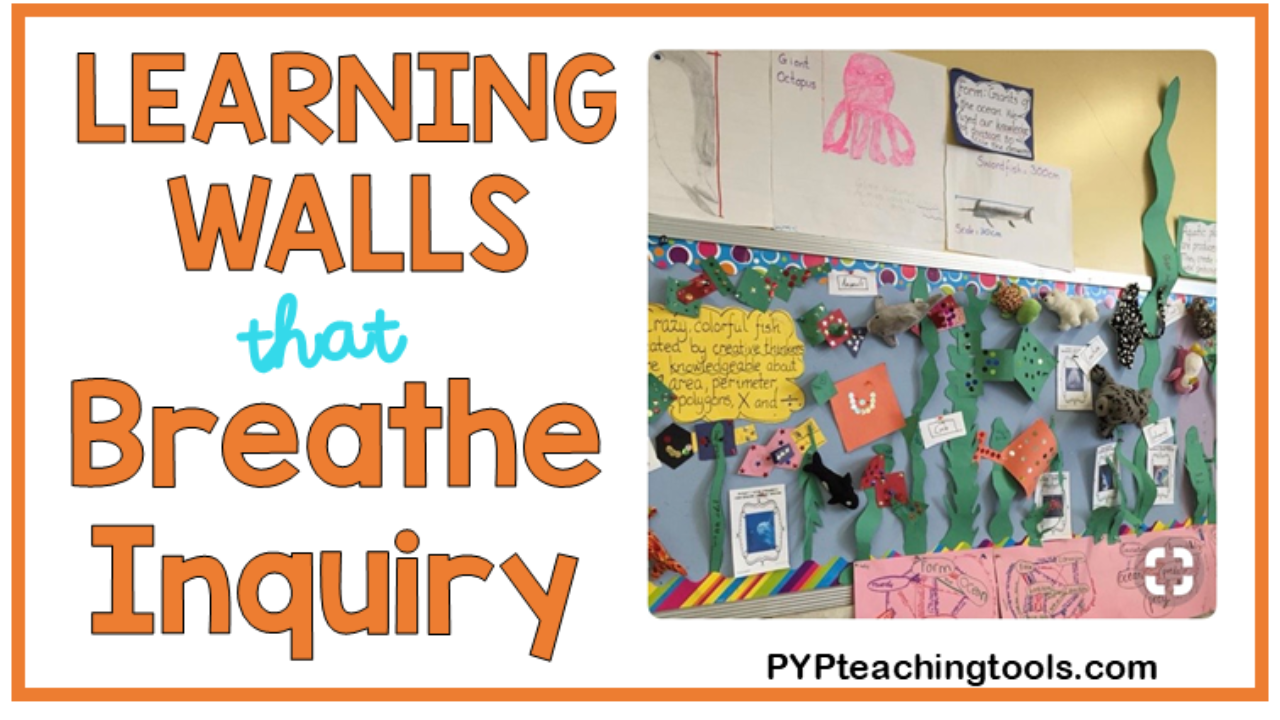
Learning Walls That Breathe Inquiry: Making ATL Skills Visible in the IB PYP Classroom
Learning walls are living, breathing spaces for inquiry. They go far beyond decoration. They act as a third teacher, shaping thinking, talk, and reflection. Over my years as a PYP teacher, I’ve learned that when the classroom environment becomes a partner in learning, it transforms how children see themselves as thinkers, questioners, and collaborators. Please enjoy the examples of my inquiry boards/learning walls from my classroom over the years. Ive linked the units of inquiry below, if you'd like a closer look.
- A Science Inquiry into Ocean Life: Ecosystems, Interdependence, Connection
- Adaptations of Living Things
- Who We Are: Identity, Beliefs & Values
- How We Express Ourselves: Arts, Influence, Behaviour
What Makes a Learning Wall Come Alive?
A true learning wall is organic and flexible, evolving as learners’ questions, discoveries, and understandings grow. It’s not a teacher-owned display but a...
What Is An Inquiry Cycle in the IB PYP ?

If you're new to inquiry based learning or the IB PYP, you may very well be asking yourself what exactly is an inquiry cycle? Well, basically it is a marvellous journey that you take alongside your students, allowing a common language into exploration.😊 Let's dive in and unpack it together.
Concept-based inquiry is at the heart of the IB PYP pedagogy and the process of inquiry is often modelled as a linear cycle. There are many correct inquiry cycles out there and it doesn't matter which one you prefer to follow or adapt since the process of learning is what's most important for your students. It provides a powerful framework for cultivating curiosity in our classrooms. When we talk about inquiry, we’re talking about active learning; empowering our students to BE thinkers, questioners, explorers, communicators. However, PYP schools are probably most familiar with Kath Murdoch’s inquiry cycle.
In today's post, we’ll explore the fundamental stages of the process of inquiry and I'll o...
