
Strategies for Planning a Concept-Based Inquiry in the IB PYP
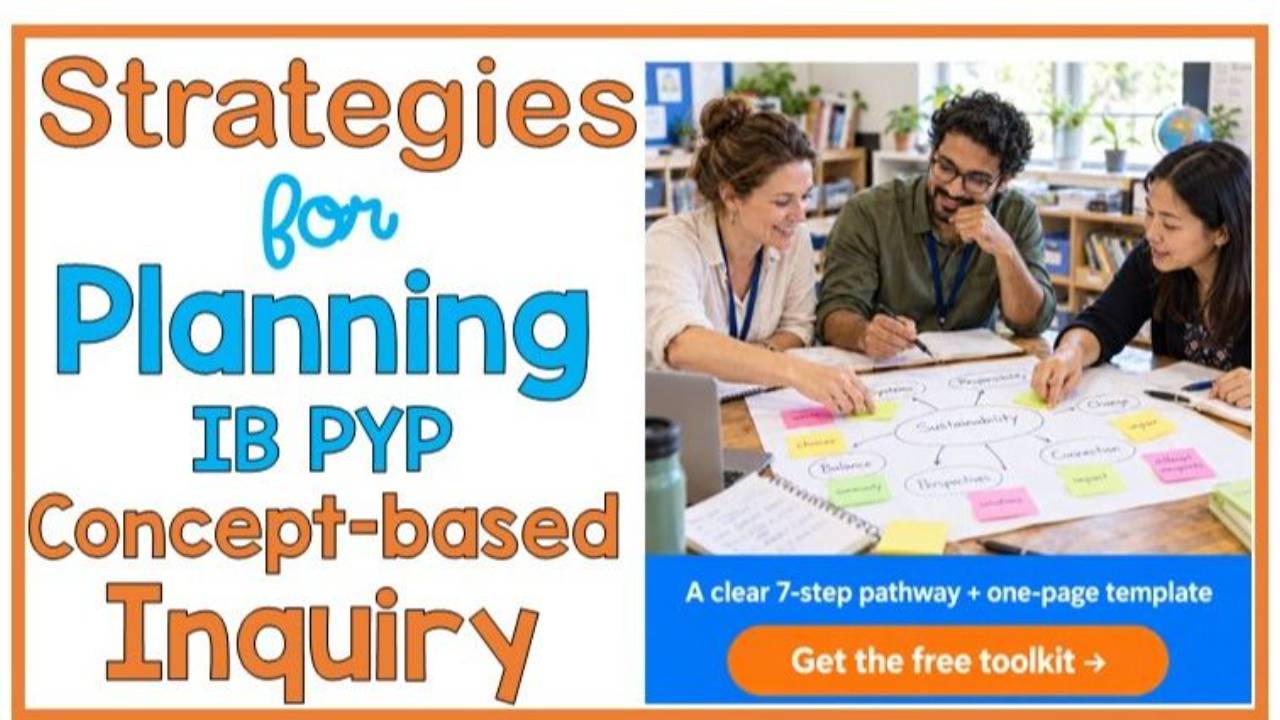
"Plan with concepts, not content." It's one of the most repeated lines in IB PYP training and one of the least explained. Everyone agrees it's the right idea. Almost nobody tells you what to actually do with it on a Tuesday afternoon, thirty minutes into a planning meeting, staring at a blank Programme of Inquiry template.
If that sounds familiar, you're not behind. You've just never been handed a process only the philosophy. Don't worry. Help is at hand.
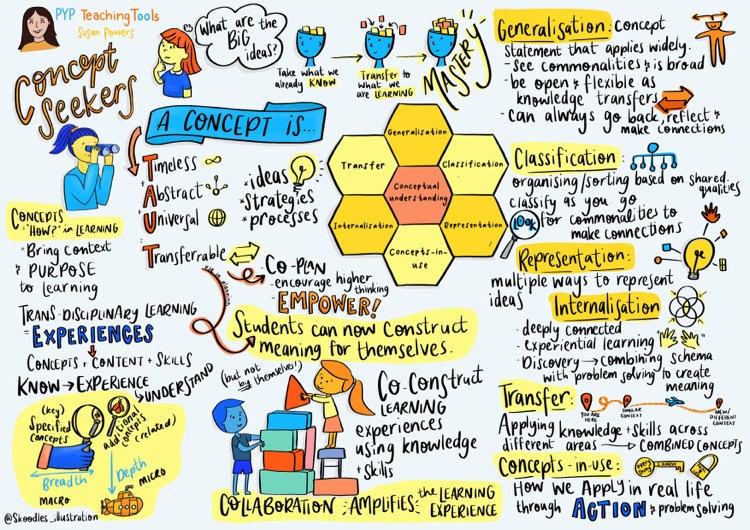
Why Concept-Based Planning Feels Harder Than It Sounds
In theory, concept-based inquiry is straightforward: start with a big transferable idea, not a topic. In practice, most planning meetings hit the same wall almost immediately:
- Which concepts actually belong to this unit, and which ones are you forcing in because they sound good?
- Are they even concepts or topics?
- Is this specified concept supporting the additional one and does the difference even change what you plan?
- You've got six themes and subject areas to consider. Do they all need their own concepts? How many is too many?
- Forty minutes in, you still don't have a central idea, so content quietly takes back over because content, at least, is fast and understood.
None of that means you're doing it wrong. It means concept-based planning was never actually taught as a process just as a principle you were expected to somehow apply.
The Concept Pool Problem
The usual fix teachers reach for is a concept bank ...a big reference chart organised by discipline, so there's somewhere to look when you're stuck. It's a genuinely useful thing to have.
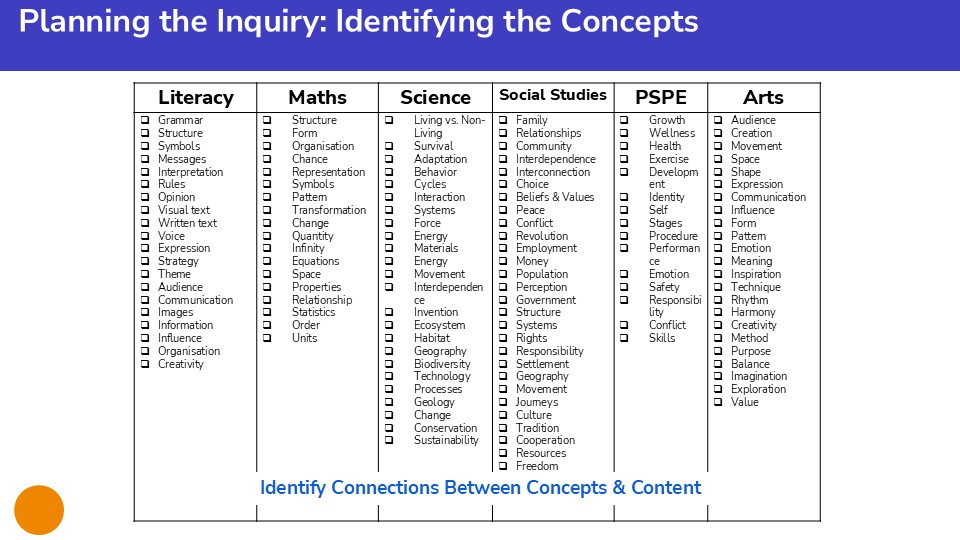
A full concept bank is useful but useful isn't the same as usable in a 40-minute planning meeting.
Look at how much sits under just one column. Now imagine trying to choose from all six, for a single unit, in the time you've got before the bell.
That's not a you problem. That's a design problem with the chart, not with your planning.
More Concepts Isn't the Fix.... a Process Is
A concept bank tells you what's possible. It doesn't tell you what's right for this unit, in this order, with this class. Knowing that "systems," "interdependence" and "adaptation" all exist as concepts doesn't get you any closer to a central idea if you don't know which one to reach for first, or why.
That's the actual gap in most concept-based planning, not a shortage of concepts, but a shortage of sequence. A clear starting point. A next step. Something repeatable enough that you're not reinventing your process every single unit, for every single theme.
That's exactly what I sat down and built after twenty-five years of planning IB PYP units across six countries; a short, practical, step-by-step pathway that takes you from theme to content without losing the inquiry along the way.
It's free and it takes about 20 minutes to work through. Certainly doable in your planning time.
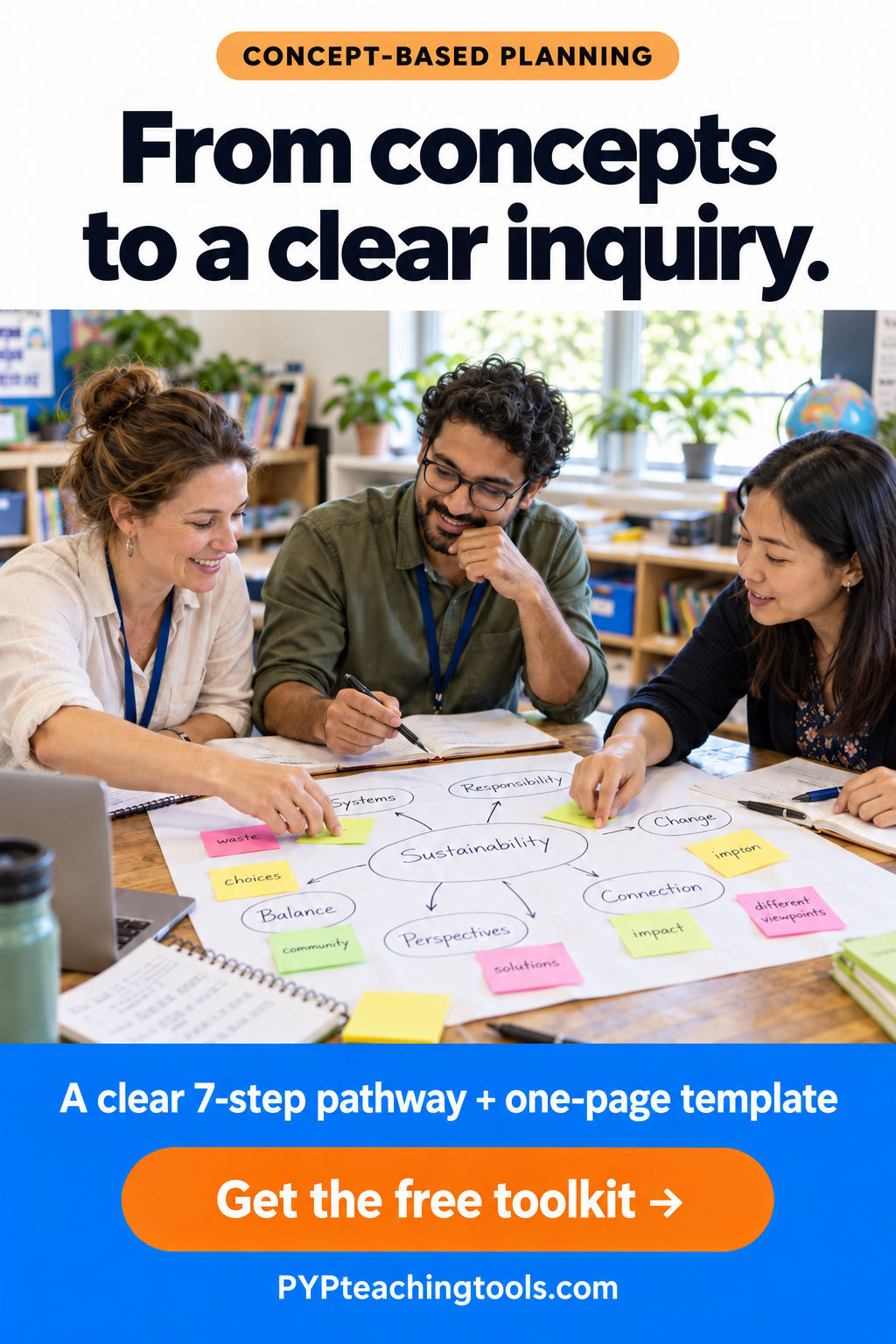
→ Download Plan the Inquiry: A Concept-Based Planning Toolkit
Inside, you'll get specified vs. other concepts explained simply, a clear step-by-step planning pathway you can reuse for any theme, and a simple, one-page planning template to try on your very next unit.😊
Where It Usually Falls Apart
A few of the other sticking points worth naming honestly:
Concepts and skills end up planned separately. You pick your concepts, then separately pick your Approaches to Learning skills because they "fit the planner" rather than the skills coming from what the inquiry genuinely demands. It's a small distinction that changes almost everything about how authentic a unit feels.
Reflection gets left until the end, if it happens at all. Concept-based understanding is supposed to deepen over the unit, but without a structure for revisiting concepts along the way, most units still just move linearly through content and call it inquiry.
Nobody has time to document what actually shifted in students' thinking. So the same gaps resurface the next time you teach the unit, and the same planning meeting takes just as long as it did last year.
None of these are solved by trying harder in the moment. They're solved by having a process that already accounts for them which is the whole point of building one once, well, rather than reconstructing it from scratch every unit.
A Simpler Starting Point
You don't need a bigger concept bank. You need one clear question to return to at every stage of planning, and a pathway that turns that question into a finished unit.
→ Get the free Plan the Inquiry toolkit here it's the starting point I wish someone had handed me twenty-five years ago.
And if you get to the end of it and want the fuller picture the complete unit planner template, the provocation bank, the worked examples, ongoing coaching...... that's what lives inside the Essentials for Inquiry Community Membership. No pressure either way; the toolkit stands on its own.
Start with the question. Let the process do the rest.
Here's to keeping things simple!
