
Conceptual Learning in the PYP: Exploring the Shift from Skills to Understanding
The Big Shift: From Scope & Sequence to Subject Continuum
The International Baccalaureate has announced a major update in the 2025 PYP Subject Documents, marking a philosophical and practical evolution in how we view learning.
The familiar Scope and Sequence documents, once our go-to reference for what students should know and be able to do, are now being replaced with Subject Continuums.
But this isn’t just a terminology update. It represents a fundamental shift from skills-based planning to concept-based understanding.
Where the Scope and Sequence outlined a linear progression of skills, the Subject Continuum invites teachers to view learning as an ongoing, interconnected journey of conceptual growth across disciplines.
Why the Shift Matters
The move to Subject Continuums recognises that skills do not exist in isolation but that they are vehicles for understanding bigger ideas. By embedding conceptual understanding within skills, we move from “What can they do?” to “What do they understand through what they can do?”
This brings the IB’s constructivist philosophy to life, encouraging us to design learning experiences that promote transfer, connection, and reflection which is the very essence of transdisciplinary learning.
Understanding the Change: From Skills to Conceptual Continuums
| Old Approach (Scope & Sequence) | New Approach (Subject Continuum) |
|---|---|
| Focused on discrete skills within subject areas | Emphasises conceptual growth across disciplines |
| Linear progression of outcomes by year level | Fluid, developmental continuum showing how understanding deepens |
| Teachers “taught to the skill” | Teachers teach through the concept |
| Skills often assessed in isolation | Skills are assessed as expressions of conceptual understanding |
This change helps us ask new kinds of planning questions:
- What concept is revealed when a learner applies this skill?
- How do the skills we teach lead to deeper conceptual understanding?
- How can we show the continuum of growth in both?
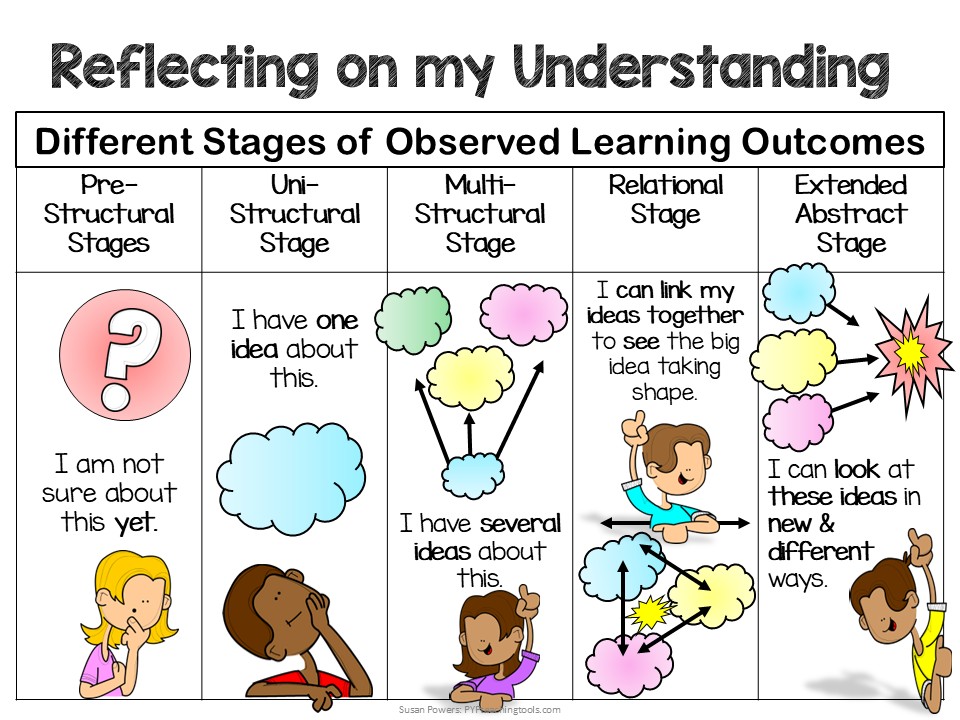
(You can read more about reflection and assessment strategies using SOLO taxonomy in the IB PYP in this blog article here. )
Finding the Concepts Within Skills
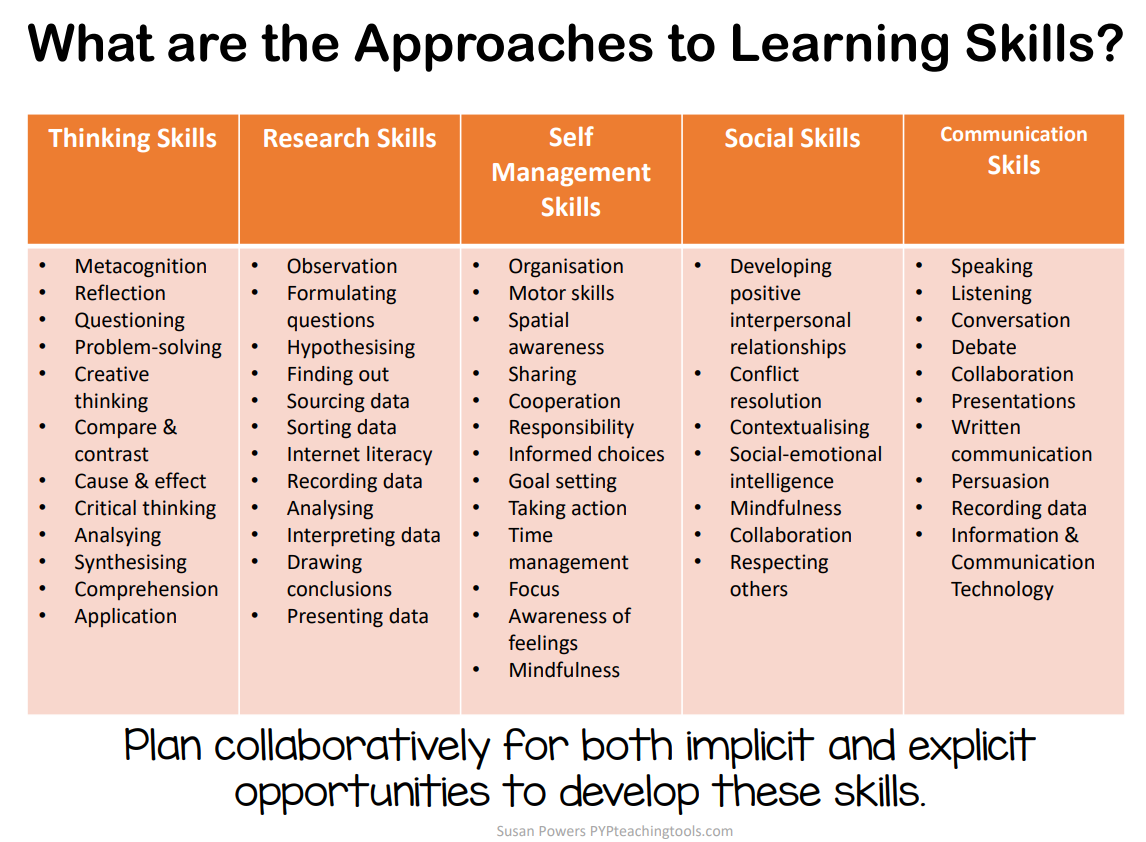
Every skill points to a concept if we look closely enough. Here are a few examples from common PYP disciplines:
Language
Skill: Identifying the author’s purpose.
Concept: Perspective — understanding that authors write from different viewpoints to communicate ideas and emotions.
Inquiry Idea: Explore how authors shape readers’ emotions through language choice.
Mathematics
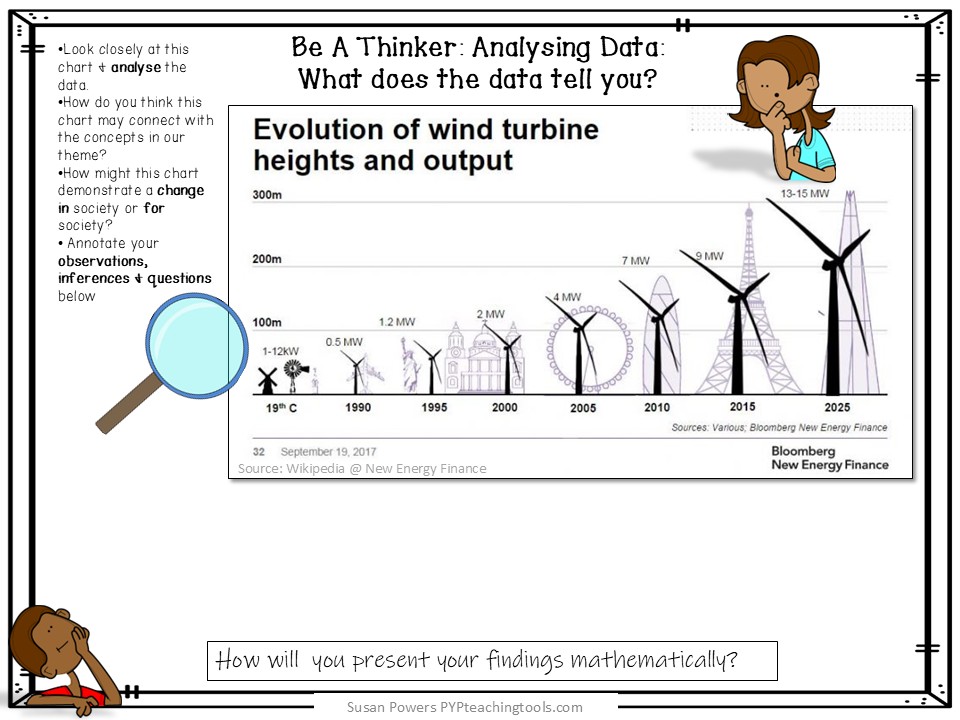
Skill: Interpreting data using graphs.
Concept: Form and Function - how data can be represented visually and used to show patterns or relationships.
Inquiry Idea: Use real-world data sets (e.g., comparing data across time, daily temperature etc.) to visualise change and discuss what the patterns reveal.
Science

Skill: Designing a fair test.
Concept: Causation and Function - how variables affect outcomes and how systems operate.
Inquiry Idea: Students design an experiment to test how light intensity affects plant growth, then connect results to the function of photosynthesis.
Social Studies
Skill: Analysing maps and spatial data.
Concept: Connection : understanding how geography influences human activity.
Inquiry Idea: Compare historical maps to current ones to explore change and connection between environments and settlements.
Arts
Skill: Using color and texture to express emotion.
Concept: Form and Perspective: how artistic choices communicate meaning.
Inquiry Idea: Students create artwork that represents different emotional “climates,” discussing how choices in form express inner experience.
The Energy Unit: A Conceptual Lens in Action
Let’s see how this conceptual approach can look in practice. The examples I'm sharing are all part of our 6 week unit of inquiry which you can find here.
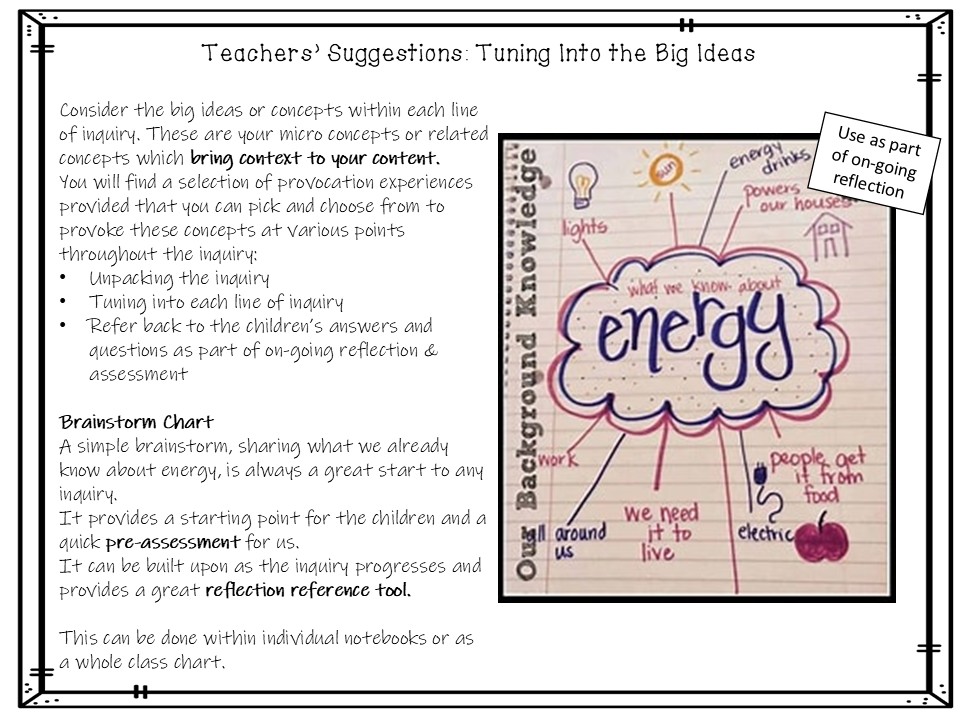 Central Idea:
Energy exists in different forms and is transformed to serve human and natural purposes.
Specified Concepts:
- Form: What are the different forms of energy?
- Function: How does energy move and transform?
- Connection: How is energy used in our daily lives?
- Change: How does our use of energy impact the environment over time?
Lines of Inquiry:
- Forms of energy and their observable features (Form)
- How energy is transferred and transformed (Causation)
- Human reliance on and impact through energy use (Connection and Change)
Finding Concepts Within Skills: Energy Unit Breakdown
| Subject | Skill Focus | Embedded Concept | Learning Example |
|---|---|---|---|
| Science | Research: Conducting experiments to test energy transfer | Function, Transformation | Students explore how heat moves through materials, linking outcomes to real-world applications like insulation. |
| Mathematics | Thinking & Communication: Measuring and recording energy data | Form & Change | Learners graph the efficiency of different energy sources and interpret how energy use changes over time. |
| Language | Research & Communication: Researching and presenting information | Connection | Students synthesise findings into persuasive presentations advocating for renewable energy. |
| Social Studies | Thinking: Analysing human systems and consumption | Causation, sustainability, interdependence | Students examine how societal choices affect energy sustainability and global interdependence. |
| Arts | Thinking, Social & Communication: Collaboratively design a visual representation of energy flow | Form and Perspective | Learners use movement or visual art to show energy transformation (e.g., solar energy into electricity). |
Classroom Inquiry Suggestions: These examples come from our 6 week unit of inquiry. You can find the complete resource here. 😊
- Energy Detectives: Learners identify sources of energy around the school, classify them (renewable/non-renewable), and connect each to a key concept.
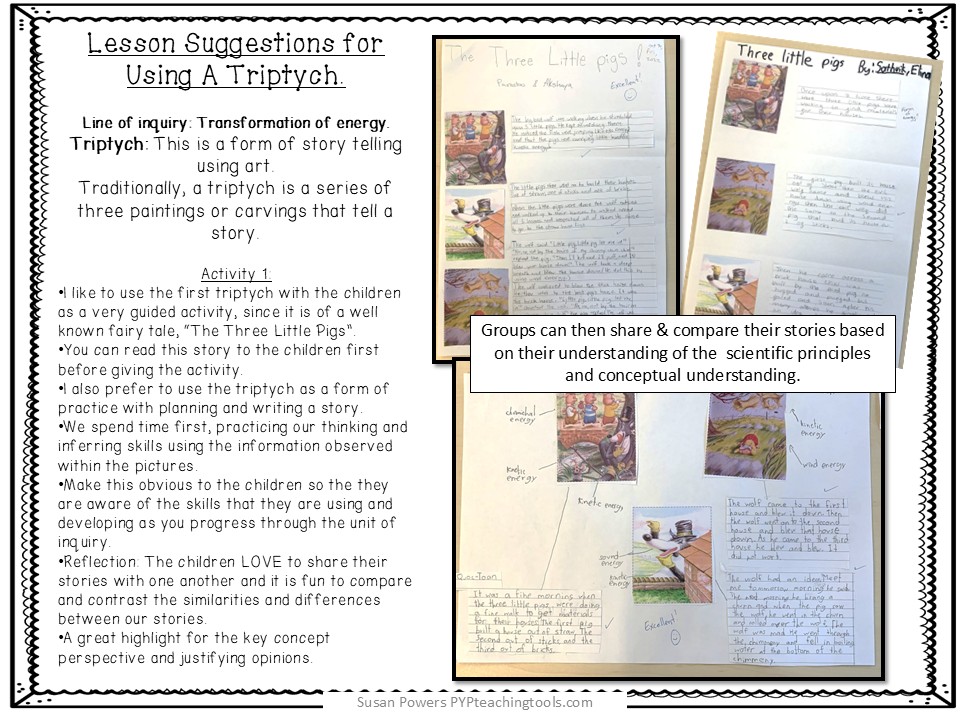
- Energy stories: Using a triptych of the 3 Little Pigs fairytale, children will identify different forms of energy and energy transfer in the tale and re-tell the tale, sharing their understanding of the concepts of energy, change and connection.
- Design Challenge: Create a model of a sustainable city showing energy transformation in action.
- Reflection Routine: Students use “I used to think… Now I think…” to document conceptual growth as visible evidence of movement along the continuum.
What Teachers Can Do Now

To bring this shift to life in your own classroom, consider the following as you are planning through the ATL Skills:
- Reframe Planning Questions: Instead of asking “Which skill am I teaching?” ask “What concept does this skill reveal?”
- Use Continuums for Reflection: Show students where they are on the conceptual path and what their current understanding looks like and what’s next.
- Make Learning Visible: Use anchor charts and learning walls as your third teacher to display how skills and concepts connect across subjects.
- Collaborate Across Disciplines: Build shared language around concepts so that learning feels coherent and connected.
- Document Growth Over Time: Use your learning wall and portfolios to capture evidence of conceptual development, not just skill mastery. You can read more about documenting learning and bringing your learning walls to life in this article. 😊
Final Thoughts
The move from Scope & Sequence to Subject Continuum in the PYP is more than a curriculum redesign. I think it more as a pedagogical reawakening.
By focusing on conceptual understanding within skills, we give learners a map for thinking, not just a checklist for doing. They come to see learning as a continuum; a fluid, ever-evolving process of inquiry, connection, and reflection.
As PYP educators, our task is to help our students find meaning in the how and why behind every skill they master. Through experiential learning we are leading them towards deeper understanding of the big ideas. That’s where true understanding lives.
Enjoy the journey!

P.S. You can find many more complete units of inquiry in my PYP Teaching Tools store. With many concepts from fairy tales to migration, human rights to governing bodies, you'll surely find something to support your inquiries. I'll leave the link for you here so you can take a closer look. 😊
BE INSPIRED. BE CONFIDENT. BE READY!
Making the shift from teaching skills to teaching for deep understanding isn't just a mindset change. It's a classroom-management challenge. The membership gives you the practical bridge: month after month of ready-to-use strategies and resources that turn that conceptual shift into everyday classroom practice, so understanding, not just content, is what sticks.
